

 Image 1 of 1
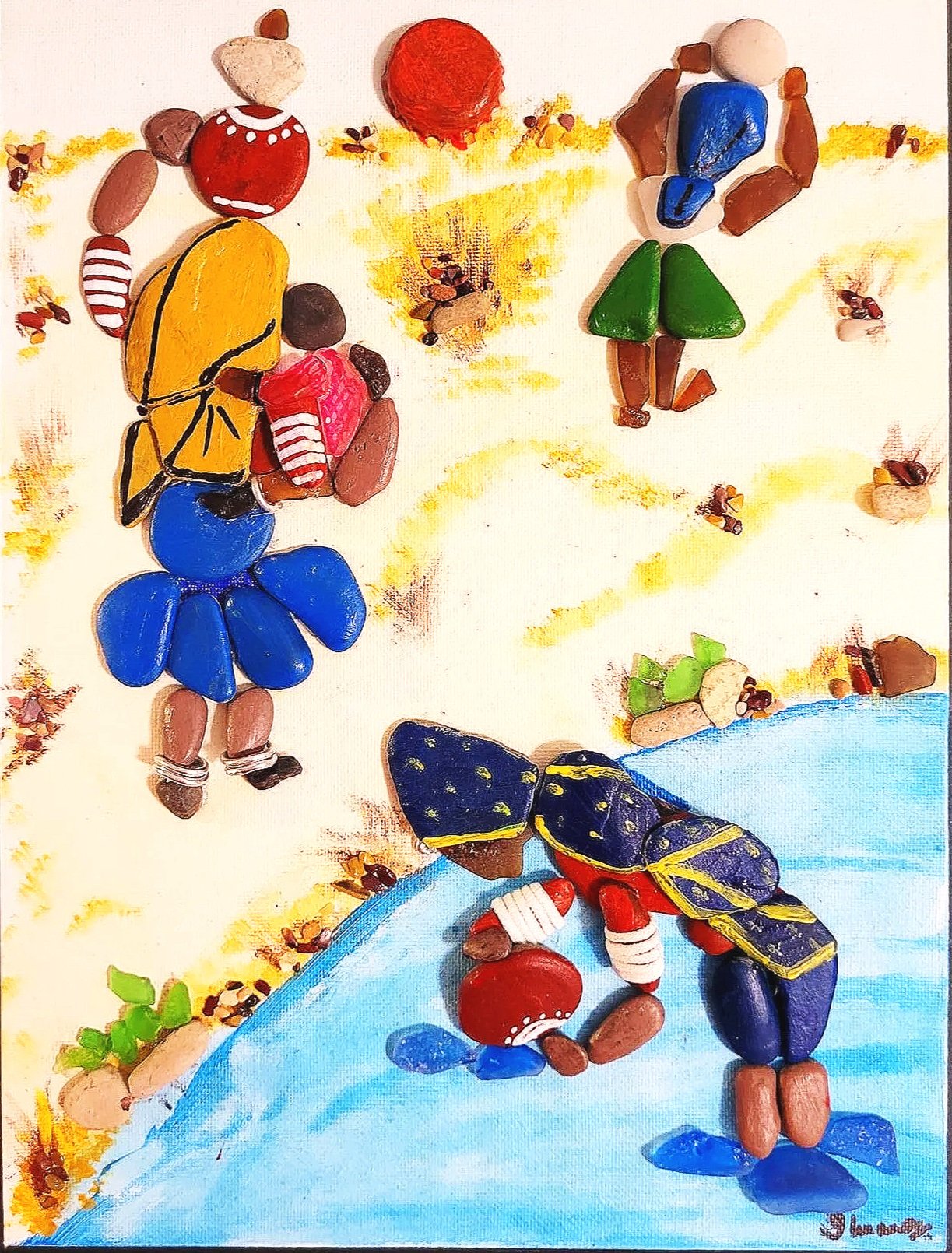
Handcrafted using handpicked pebbles painted with acrylics, green, brown and white seaglass stained with blue ink, jewelry made from white/silver/black jewelry making wire.
Kajri, Punia and Neela live somewhere in a remote village in the Thar desert in the South Asian subcontinent. They are among 2.1 billion women in developing countries( eg India, Kenya, Bolivia) who walk an average of 6km to fetch water everyday. They spend anywhere from 8 to 16 hours in a single day to fetch water from the nearest rain stream, making several rounds.
The water is necessary for cooking, washing, drinking of all who live at home, including the cattle in their backyard.
Most of the days they walk over hot sand under the scorching sun of anywhere between 40 to 50 degrees heat. Most of the times they go in a group and sing along the way.
Punia has a 10 month old child who she is breastfeeding. Hence she carries the baby along.
Anywhere across the globe, fetching water is exclusively a woman's job. Men usually go to fields or work as laborers so are not home. However, even if they are home, it is a woman's duty to fetch and carry water home for utilities.
This depicts a scene from Thar, where despite arrid hot climate women wear bright colors and heavy silver jewelry like the anklets. The white armlets are made of ivory or bone and are worn by married women.
One-of-a-kind heirloom quality conversation piece that ensures exclusivity in your art collection, with no reproductions & no prints.
Presented in a shadow box (12×16”) that enhances depth and allows for safe display options.
Handcrafted using handpicked pebbles painted with acrylics, green, brown and white seaglass stained with blue ink, jewelry made from white/silver/black jewelry making wire.
Kajri, Punia and Neela live somewhere in a remote village in the Thar desert in the South Asian subcontinent. They are among 2.1 billion women in developing countries( eg India, Kenya, Bolivia) who walk an average of 6km to fetch water everyday. They spend anywhere from 8 to 16 hours in a single day to fetch water from the nearest rain stream, making several rounds.
The water is necessary for cooking, washing, drinking of all who live at home, including the cattle in their backyard.
Most of the days they walk over hot sand under the scorching sun of anywhere between 40 to 50 degrees heat. Most of the times they go in a group and sing along the way.
Punia has a 10 month old child who she is breastfeeding. Hence she carries the baby along.
Anywhere across the globe, fetching water is exclusively a woman's job. Men usually go to fields or work as laborers so are not home. However, even if they are home, it is a woman's duty to fetch and carry water home for utilities.
This depicts a scene from Thar, where despite arrid hot climate women wear bright colors and heavy silver jewelry like the anklets. The white armlets are made of ivory or bone and are worn by married women.
One-of-a-kind heirloom quality conversation piece that ensures exclusivity in your art collection, with no reproductions & no prints.
Presented in a shadow box (12×16”) that enhances depth and allows for safe display options.